Rust solo survival on official servers rewards patience, positioning and a plan built around 14,782 hours of experience
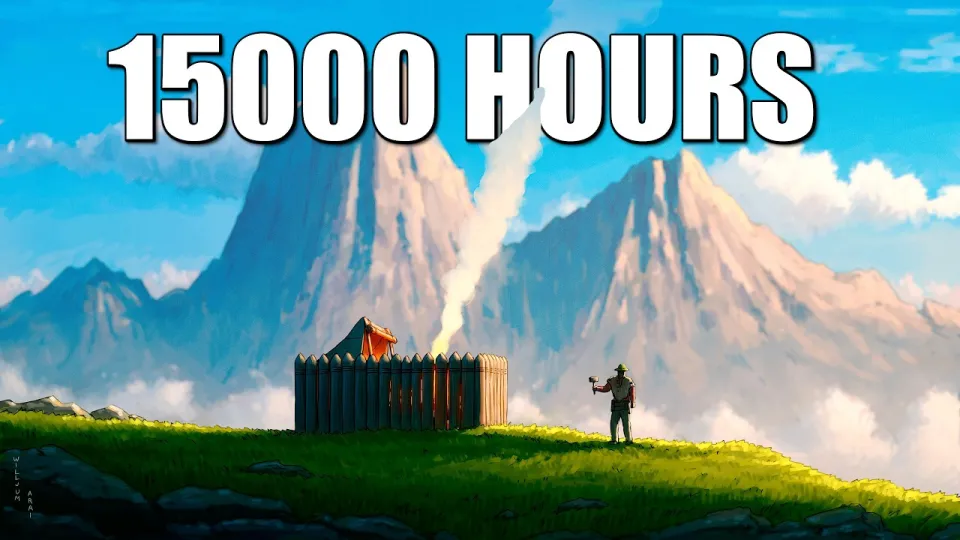
Video: How a solo with 14,782 Hours plays official rust...
You can order the same kind of articles for your own video to boost it on YouTube and Google. Just message the Telegram bot @sat_sit_bot. The bot writes and publishes the articles itself (with your YouTube video embedded) on popular topical websites (no ads). Free trial — 50 articles.
· based on the channel Willjum
Key takeaways
- Willjum's solo run is built on 14,782 hours of Rust playtime, roughly the equivalent of a full-time job for over seven years.
- The gameplay is on official Rust servers, where there are no boosted gather rates, no kit plugins and no team to share the risk.
- A solo wipe on official hinges on base location, scrap economy and knowing when not to take a fight.
- The base in the video was built from a design by the creator Luca Builds, credited in the video description.
- Willjum runs his own Rust servers alongside the official gameplay, including solo-only Thursdays and casual duo monthlies in EU and NA.
Rust solo survival on official servers is a test of restraint rather than raw aim: one player, no teammates, standard gather rates and every death costing real progress. Watching someone with 14,782 hours logged play the same rules shows what actually separates a wipe that lasts from one that ends in the first hour — base placement, scrap discipline and picking fights only when the odds are already decided.
What 14,782 hours of Rust actually buys a solo player
The headline number is the point of the video: 14,782 hours is more than seven years of full-time work, and it shows up in small decisions rather than flashy plays. A veteran solo on official servers is not faster at farming; they simply waste less. That means fewer trips across the map with a full inventory, fewer doors left open, and a habit of stashing loot before a fight instead of after it.
For a new solo, the practical lesson is that time in Rust compounds. Every wipe adds map knowledge — where monuments sit relative to each other, which roads are busy at which hour, how long a raid typically takes to arrive after a base is spotted. None of that transfers from a 5x modded server, where resource scarcity disappears and the entire risk calculation changes.
Official servers versus modded: why the ruleset decides the wipe
Official Rust servers run vanilla gather rates, no kits and no teleporting, which makes every decision about time expensive. On a modded 2x or 5x server a solo can rebuild a base in twenty minutes; on official, losing a starter base can cost an evening.
The consequences for a solo are concrete:
- Scrap is the real currency. Every workbench tier, every blueprint, every research costs scrap that has to be carried home safely.
- Base location matters more than base size. A small base in a quiet corner survives longer than a compound in a popular valley.
- Farming routes must be short. The less time spent travelling with ore in your inventory, the fewer chances to be intercepted.
- Gear fear is rational. Losing a full kit on official costs hours, so taking a fight without an advantage is a bad trade even when the aim is good.
Base building and the candle hat problem
A solo base on official Rust is a decoy as much as a home. In the video the build itself comes from a design by the creator Luca Builds, credited in the description, and the layout follows the standard solo logic: small footprint, multiple airlocks, and nothing visible from outside that suggests wealth.
One of the most discussed moments in the run is a promise to build with a candle hat for visibility that is then never used again — a reminder that improvisation costs time and that a plan made at the start of a wipe rarely survives contact with it. The more useful habit is boring: honeycomb the core, keep the loot room away from the outer wall, and never store everything in one box.
Placement follows the same principle. A base near a monument gets scrap faster but attracts traffic; a base in the snow or at the edge of the map is slower but quieter. Solos who last on official usually pick the second option and accept the longer walk.
Scrap economy and the weapon you actually need
There is a running joke in the Rust community about players who insist they do not spend scrap on weapons while quietly crafting their twenty-eighth nail gun of the wipe. The joke hides a real principle: on official servers, scrap spent on blueprints is an investment and scrap spent on disposable gear is a leak.
A workable solo priority list looks like this:
- Tier 1 workbench first, then the essential blueprints: bow, crossbow, metal tools, medical supplies.
- Research before you craft. A single research of a weapon or tool pays for itself across a wipe.
- Save for Tier 2 rather than dumping scrap into repeat purchases of cheap weapons.
- Trade scrap for time at outpost or bandit camp when a trip across the map would cost more than the purchase.
A solo who reaches Tier 2 with a stocked base is already ahead of most of the server, because most players lose their progress to a single bad decision long before that point.
PvP decisions a solo should and should not take
Veterans do not avoid PvP; they choose it. The pattern in a long solo run is consistent: fights are taken when a target is already damaged, distracted, or carrying something worth the risk, and skipped when the enemy has numbers or cover. Jumping two players as a solo is not confidence, it is arithmetic — and the arithmetic usually loses.
Small habits do the heavy lifting:
- Scout a fight before joining it, and count the players involved.
- Use sound — footsteps carry much further than most new players expect, which is why experienced solos move crouched near monuments.
- Keep a fallback stash with a weapon and meds so a death does not reset the wipe.
- Leave the area after a kill; the noise of a fight attracts everyone within earshot.
That last point explains why long-time players seem paranoid. On a populated official server, a gunfight is an advertisement.
Frequently raised questions from solo players
New and returning solos tend to raise the same doubts after watching a run like this. The most common is whether the hours are even believable; the second is whether official servers are playable without a group; the third is how much of the success is mechanical skill. In practice, map knowledge, patience and a disciplined scrap plan matter more than flick shots, and the players who burn out on official servers are usually the ones who treat every encounter as a fight to win rather than a decision to make.
Links from the video
- Manscaped Father's Day offer with the code WILLJUM15: https://manscaped.com/willjum
- Willjum on Patreon: https://www.patreon.com/Willjum
- Willjum on Twitch: https://www.twitch.tv/willjum
- Willjum on Twitter: https://twitter.com/willjum1
- Creative Commons Attribution 4.0 licence referenced for the music: http://creativecommons.org/licenses/by/4.0/
Final thoughts on playing Rust solo on official servers
A solo wipe on official Rust is won by the player who loses the least, not the one who wins the most fights. The 14,782-hour run shows the pattern clearly: a modest base from a known design, scrap spent on blueprints instead of repeat gear, and fights accepted only when the outcome is already likely. Viewers who want the full picture can watch the breakdown on Willjum's channel, where the solo perspective is presented without commentary from a team. If the sponsored gear in the run is of interest, the Manscaped offer page carries the Father's Day discount and free shipping with the code from the video.
Questions & answers
Is Rust playable as a solo on official servers?
Yes, but the ruleset changes the strategy. Official servers have vanilla gather rates and no kits, so a solo survives by keeping the base small, farming close to home and avoiding fights without an advantage. Progress is slower than on modded servers, but it is entirely possible with a disciplined scrap plan.
How long does it take to reach a Tier 2 workbench as a solo?
On vanilla rates, a focused solo can usually reach a Tier 2 workbench within the first day of a wipe by running roads and low-tier monuments for scrap and components. The bottleneck is not the workbench itself but the blueprints researched afterwards, which is why saving scrap early matters more than buying gear.
Do I need high mechanical skill to survive on official Rust?
Less than most people assume. Positioning, sound awareness and knowing when to disengage decide more fights than aim does, especially for a solo facing groups. A player who scouts before engaging and keeps a fallback stash will often outlast a better shooter who takes every fight.
What is the best base location for a solo player?
Quiet areas at the edge of the map or in the snow are generally safer than spots next to popular monuments. The trade-off is a longer walk for scrap runs, but a small, well-honeycombed base in low-traffic terrain survives far longer than a large compound in a busy valley.
Source: How a solo with 14,782 Hours plays official rust... · Markdown version